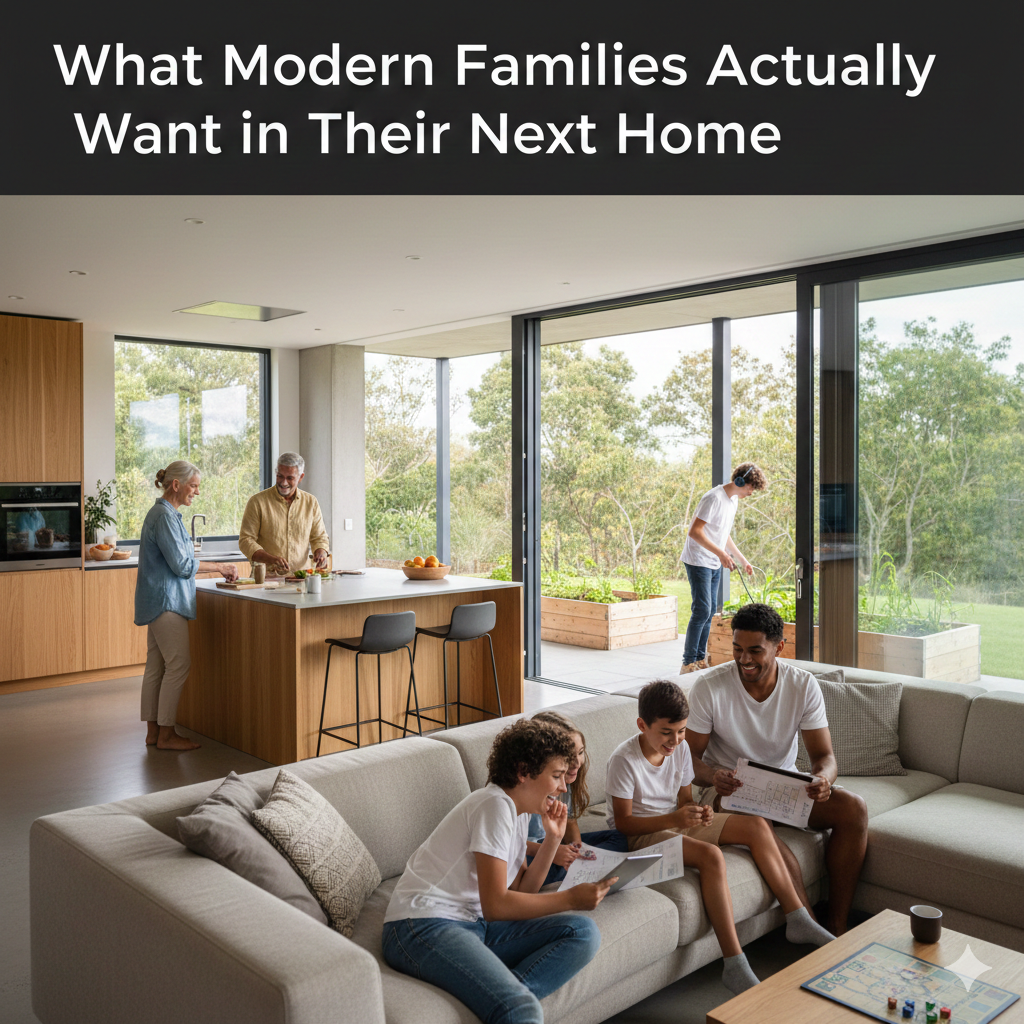
The definition of an ideal family home has transformed dramatically in 2025. Gone are the days when families simply wanted spacious rooms and good locations. Today’s homebuyers—especially millennials, young professionals, and multi-generational families—seek homes that adapt to evolving lifestyles, support work-from-home arrangements, promote wellness, and integrate seamlessly with technology. The pandemic fundamentally altered how families view their living spaces, transforming homes from mere shelters into multifunctional environments supporting work, education, recreation, and health. Understanding what modern families prioritize helps developers create relevant properties and assists buyers in finding homes that truly enhance their quality of life rather than just providing accommodation.
What Modern Families Prioritize in Their Next Home:
- Flexible Multi-Purpose Spaces: The single most demanded feature in 2025 is space adaptability. Modern families need rooms that serve multiple functions—a guest bedroom that doubles as a home office, a study area that converts into a nursery, or a utility room functioning as a hobby space. With nuclear families increasingly becoming multi-generational living arrangements, buyers prefer larger units with dual-use spaces, extra bedrooms, or separate entrances accommodating elderly parents or adult children. This flexibility ensures homes remain relevant as family needs evolve through different life stages without requiring relocation or major renovations.
- Dedicated Work-From-Home Infrastructure: Remote and hybrid work models have become permanent fixtures, making home office setups non-negotiable. Families want dedicated workspaces with proper lighting, soundproofing, and strong internet connectivity that allow productive work without disrupting household activities. Properties offering built-in study rooms, co-working spaces within residential complexes, and fiber-optic internet infrastructure attract premium interest. The ability to conduct video conferences, attend online classes, and manage professional responsibilities from home without compromising on family life has become essential rather than optional.
- Smart Home Technology Integration: Modern families expect homes that respond intelligently to their needs. Smart home features including automated lighting systems, voice-controlled appliances, intelligent climate control, app-based security monitoring, and video doorbells have transitioned from luxury additions to expected standards. These technologies offer convenience—adjusting thermostats remotely, monitoring home security while traveling, and managing energy consumption through smart meters that reduce bills by up to 25%. Families particularly value AI-driven security systems with facial recognition, real-time alerts for motion or suspicious activity, and integration with emergency services providing peace of mind for parents and frequent travelers.
- Comprehensive Wellness Amenities: Health consciousness has intensified post-pandemic, with families prioritizing properties offering holistic wellness facilities. Modern residential projects must include fully equipped gymnasiums, dedicated yoga and meditation studios, swimming pools with proper maintenance, jogging tracks through landscaped areas, and outdoor sports facilities like badminton or tennis courts. Additionally, amenities such as green spaces for mental wellbeing, air purification systems, and spa facilities with steam rooms have become selling points. Families recognize that integrated wellness infrastructure eliminates external gym memberships while encouraging healthier lifestyles and family bonding through shared activities.
- Sustainable and Eco-Friendly Features: Environmental consciousness strongly influences modern homebuying decisions. Families actively seek properties with rainwater harvesting systems, solar panels reducing electricity costs, energy-efficient LED lighting, proper waste segregation facilities, and sewage treatment plants enabling water recycling. These sustainable features aren’t just ethically appealing—they deliver tangible financial benefits by lowering monthly utility expenses. Buyers increasingly understand that eco-friendly homes with good natural ventilation, cross-airflow, and energy-efficient designs offer better air quality and healthier living environments while reducing environmental impact.
- Safety and Security Infrastructure: Security remains paramount for families with children and elderly members. Modern properties must provide three-tier security systems with gated community access, comprehensive CCTV surveillance throughout common areas, trained security personnel on 24/7 duty, biometric entry systems eliminating key-related hassles, and smart video doorbells with two-way communication. Parents particularly value secure environments where children can play freely within monitored boundaries without constant adult supervision. The integration of security technology with smartphone apps allowing remote monitoring provides invaluable peace of mind for working parents and frequent travelers.
- Open-Concept Living with Natural Light: Architectural preferences have shifted toward open layouts that combine kitchen, dining, and living areas into cohesive spaces promoting family interaction. Families want homes with large windows providing abundant natural light, proper cross-ventilation ensuring air circulation, and high ceiling heights creating spacious, airy environments. The emphasis on natural lighting isn’t merely aesthetic—it promotes mental wellbeing, reduces electricity consumption, and creates healthier living spaces. Properties offering balconies, terraces, or access to outdoor spaces extending living areas are particularly valued.
- Modern Kitchen and Storage Solutions: The kitchen has evolved into the heart of family homes, with buyers demanding sleek modular designs offering compact storage solutions while maintaining sophisticated aesthetics. Families prefer kitchens with push-to-open drawers, full-scale modular cabinet designs in multiple finishes, proper ventilation systems, and adequate space for modern appliances. Similarly, comprehensive storage throughout the home—walk-in closets with ambient lighting, built-in wardrobes with soft-close technology, and utility spaces for household equipment—has become essential. Insufficient storage remains a common complaint, making adequate built-in solutions a key differentiator.
- Community Spaces for Social Connection: Isolation has become a significant concern in modern urban living, making community infrastructure critically important. Families seek properties with expansive clubhouses featuring multipurpose halls for events, children’s play areas fostering friendships among young residents, landscaped gardens encouraging outdoor interaction, and organized community activities bringing neighbors together. These spaces help families—especially those new to cities—build social networks, provide children with playmates in safe environments, and create support systems that enhance quality of life significantly beyond physical amenities alone.
- Premium Finishes and Modern Aesthetics: While functionality dominates, families still appreciate quality finishes and contemporary design. Italian marble flooring, branded sanitary fittings, imported tiles in bathrooms, and modern door and window fixtures contribute to the premium feel. However, the focus has shifted from ostentatious display to understated elegance—clean lines, neutral color palettes, quality materials, and timeless designs that won’t feel dated in a few years. Buyers want homes that look sophisticated without constant renovation needs.
Modern families in 2025 view homes as comprehensive lifestyle ecosystems rather than just residential addresses. They demand flexibility accommodating changing needs, technology enhancing daily convenience, wellness infrastructure promoting healthy living, sustainability reducing environmental impact, and security providing peace of mind. Developers who understand these evolved priorities and create properties genuinely addressing them will succeed in attracting discerning buyers willing to pay premiums for quality living experiences. For families searching for their next home, clarity about these priorities ensures you find properties that enhance your lifestyle meaningfully rather than settling for spaces that merely provide accommodation. The modern family home isn’t about maximum square footage—it’s about thoughtful design, intelligent features, and comprehensive amenities that transform everyday living from routine existence into enriched experiences.