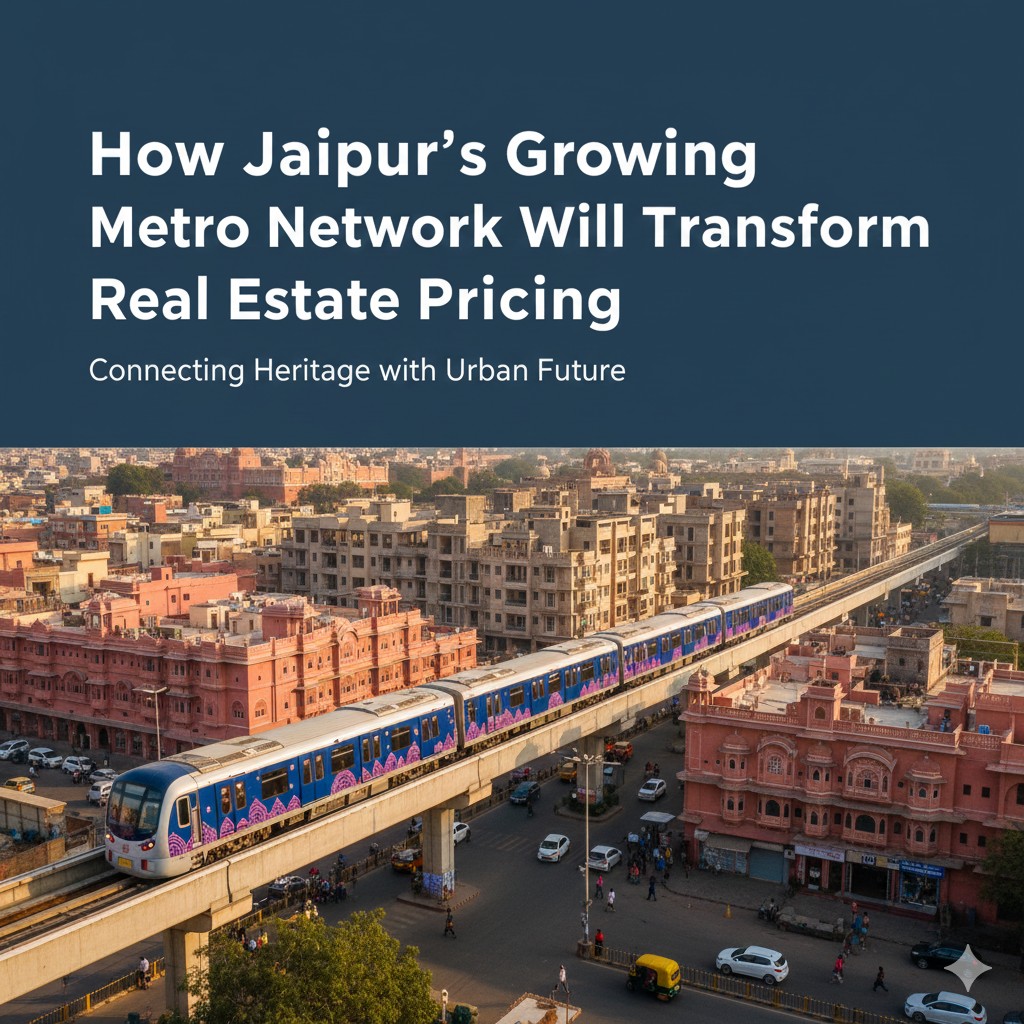
Jaipur’s metro network is on the verge of a massive expansion that will fundamentally transform the city’s real estate landscape. With Phase II receiving government approval for ₹12,260 crore spanning 42.80 kilometers from Todi Mode to Prahladpura with 36 stations, and construction set to begin in mid-2025, the metro’s impact on property prices will be profound and far-reaching. Cities across India have demonstrated that metro connectivity creates instant appreciation premiums of 15-30% for properties near stations, while transforming entire corridors from car-dependent suburbs into integrated urban zones. Understanding how Jaipur’s expanding metro network will reshape real estate pricing helps buyers and investors position themselves strategically before the full impact materializes.
The Scale of Metro Expansion and Its Coverage:
The Jaipur Metro’s expansion is comprehensive and strategic. Phase II will connect crucial areas including Sitapura Industrial Area, Shatabdi Nagar, Pratap Nagar, Sanganer, Bapu Nagar, Rambagh, C-Scheme, Chandpole, Bani Park, and Ambabari. The route strategically links industrial employment hubs like Sitapura with residential neighborhoods, healthcare facilities including SMS Hospital and Apollo Spectra, and even Jaipur International Airport. This comprehensive coverage ensures that metro benefits extend across economic classes—from industrial workers to corporate professionals and affluent residents. The 23-kilometer India Gate to Ambabari corridor, beginning construction mid-2025, targets completion by 2030, creating a definitive timeline for investors planning entry strategies.
Documented Metro Impact on Property Prices in Other Cities:
Evidence from Delhi, Bangalore, and Mumbai clearly demonstrates metro’s transformative effect on real estate. Properties within 500-meter walking distance of metro stations experience 20-30% appreciation premiums compared to equivalent properties without metro access. This premium isn’t speculative—it reflects genuine value from reduced transportation costs, time savings, and enhanced accessibility. In areas like Jagatpura positioned along metro corridors, current appreciation rates of 20-25% annually will likely accelerate further as metro construction progresses and operational timelines become clearer. Properties near metro stations also demonstrate superior rental yields, as tenants actively seek convenient commutes and willingly pay premium rents for metro proximity.
Key Jaipur Neighborhoods Poised for Metro-Driven Appreciation:
Several Jaipur neighborhoods stand to benefit disproportionately from metro expansion. Sitapura Industrial Area, already experiencing strong growth due to employment concentration, will see accelerated appreciation as metro connectivity eliminates commute barriers for workers. Jagatpura, positioned along the planned metro corridor, represents perhaps the best value proposition—current prices of ₹3,750-₹5,700 per square foot remain 30-40% below established areas while metro connectivity will bridge this gap. Ajmer Road, Civil Lines, and areas along the India Gate to Ambabari route will experience immediate re-rating as metro stations become operational. Properties currently priced below metro-connected benchmarks will converge toward those levels, delivering substantial appreciation for early investors.
Timeline-Based Investment Strategy:
Smart investors recognize that maximum returns come from entering markets during construction phases before operational benefits become apparent. The current window—with Phase II approved but construction just beginning—represents the optimal entry point. Properties purchased now at pre-metro pricing will capture appreciation through multiple phases: announcement premiums as buyers recognize future benefits, construction premiums as infrastructure becomes visible and certainty increases, and operational premiums as metro begins service and tangible benefits materialize. Historical patterns suggest 25-40% appreciation jumps occur when metro lines become operational, as properties transition from “future metro access” to “current metro connectivity.”
Beyond Direct Station Proximity:
Metro impact extends beyond properties immediately adjacent to stations. Entire corridors benefit from enhanced connectivity, improved infrastructure, and commercial development catalyzed by metro presence. Feeder routes, parking facilities, and last-mile connectivity solutions create development opportunities radiating outward from stations. Properties within 1-2 kilometer radius of stations, while not commanding the highest premiums, still appreciate significantly more than areas completely disconnected from metro networks. This creates tiered investment opportunities—highest premiums near stations for those willing to pay, moderate premiums within walking distance for value seekers, and baseline improvements for corridor properties benefiting from overall infrastructure enhancement.
Commercial Real Estate and Mixed-Use Development:
Metro stations catalyze commercial development and mixed-use projects. Retail spaces, office complexes, and hospitality ventures cluster near stations to capture commuter foot traffic. This commercial activity creates employment, attracts residents seeking convenience, and generates virtuous cycles where infrastructure attracts development that attracts more residents demanding more infrastructure. Areas like Ajmer Road and Tonk Road, designated for Transit-Oriented Development, will see property values rise not just from residential demand but from commercial interest driving mixed-use premium pricing. Investors should watch for government TOD policy announcements that could further accelerate metro corridor development.
Rental Market Transformation:
Metro connectivity fundamentally alters rental markets by expanding tenant pools. Currently, Jagatpura attracts primarily Sitapura employees seeking proximity. Post-metro, the tenant base expands to include professionals working across Jaipur who value metro convenience over employment proximity. This demographic expansion stabilizes rental income while potentially improving yields as demand strengthens. Corporate tenants—particularly those relocating to Jaipur for cost advantages—actively seek metro-connected properties for employee housing, creating steady institutional demand. Properties offering metro access command 10-15% rental premiums compared to equivalent apartments requiring vehicle ownership for daily commutes.
Risk Mitigation Through Infrastructure Investment:
Government commitment of ₹12,260 crore through the Rajasthan Metro Rail Corporation—a 50:50 central-state joint venture—provides substantial risk mitigation. Unlike private developer projects susceptible to funding issues, government-backed metro construction enjoys budgetary priority and political commitment ensuring completion. The formation of dedicated RMRC specifically for metro development signals institutional seriousness rather than opportunistic announcements. Investors can confidently plan around metro timelines knowing that unlike speculative infrastructure promises, metro projects receive sustained funding and oversight ensuring eventual completion even if timelines slip.
Jaipur’s expanding metro network represents a once-in-a-generation infrastructure transformation that will permanently reshape real estate pricing across affected corridors. Properties currently priced without metro premiums will experience significant re-rating as construction progresses and operational timelines clarify. The optimal investment window exists today—before mass market recognition drives prices to fully reflect future benefits. Areas like Jagatpura, Sitapura, Ajmer Road, and neighborhoods along the India Gate to Ambabari corridor offer compelling opportunities for buyers and investors who recognize metro connectivity’s transformative impact. Whether purchasing for personal use or investment, prioritizing properties with strong metro connectivity ensures your real estate participates in Jaipur’s infrastructure-driven appreciation story rather than being left behind in car-dependent suburbs increasingly viewed as less desirable. The metro isn’t just about transportation—it’s about permanently elevating property values for those positioned along its transformative path.