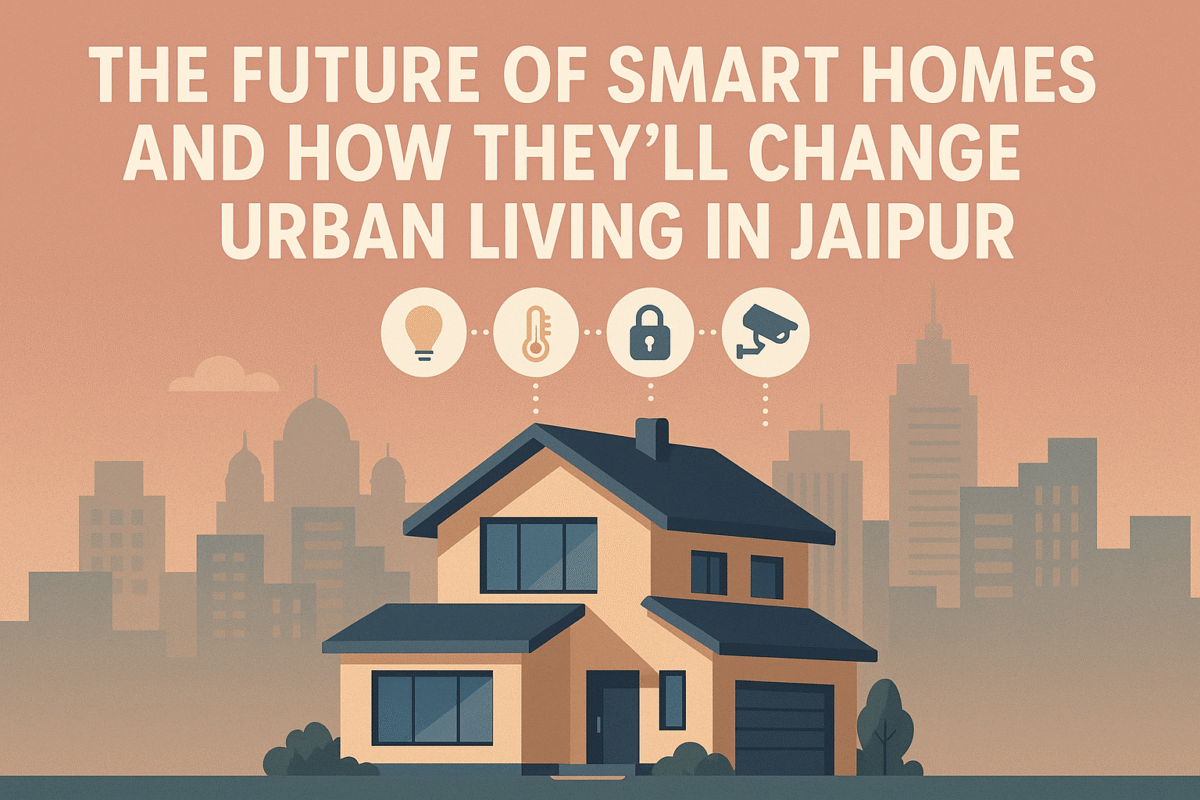
Smart homes are no longer futuristic concepts—they’re rapidly becoming the standard for urban living in India, and Jaipur is at the forefront of this transformation. As one of India’s designated Smart Cities under the government’s ambitious Smart Cities Mission, Jaipur is witnessing a technology-driven evolution where homes are becoming interactive, sustainable ecosystems designed for modern lifestyles. The convergence of IoT devices, AI-powered systems, and energy-efficient solutions is fundamentally changing how Jaipurites live, work, and interact with their living spaces. Understanding how smart homes will reshape Jaipur’s urban landscape helps buyers, investors, and residents prepare for a future where technology isn’t just an add-on but an essential component of quality living.
Key Smart Home Technologies Transforming Jaipur:
- Home Automation and Remote Control Systems: The core of smart home revolution lies in automation systems allowing residents to control lighting, appliances, security, and climate remotely through smartphone apps or voice commands via Alexa, Google Assistant, or Siri. In Jaipur’s premium developments, homeowners can adjust air conditioning before arriving home, turn off forgotten lights from their office, or manage entertainment systems seamlessly. Developers like ParthSarthi Group are already integrating these smart home features in flats, helping Jaipur residents adopt technology that simplifies everyday living. This convenience is particularly valuable in Jaipur’s extreme climate where pre-cooling homes before arrival or remotely monitoring security during summer vacations provides tangible lifestyle improvements.
- Advanced Security with Biometric Systems: Security has evolved beyond traditional locks and guards. Modern Jaipur apartments now feature three-tier security systems combining 24/7 manned surveillance, comprehensive CCTV coverage, and biometric entry systems. Biometric entry in Jaipur apartments eliminates key-related hassles—residents no longer worry about losing keys or unauthorized duplication. Smart door locks with fingerprint or facial recognition provide secure, convenient access while integrated systems send real-time alerts to smartphones if unauthorized entry attempts occur. This layered digital security is especially important for families with elderly members and working professionals who travel frequently.
- Energy Management and Cost Savings: Jaipur’s hot climate makes energy consumption a significant household expense, making smart energy management systems particularly valuable. Automated thermostats learn resident preferences and adjust temperatures optimally, reducing unnecessary air conditioning usage. Smart lighting systems turn off lights in unoccupied rooms automatically, while smart meters track real-time energy consumption helping families identify and eliminate wasteful patterns. LED lights with remote control, scheduling, and dimming capabilities provide adaptation while reducing electricity bills. These technologies can reduce energy consumption and costs significantly, making smart homes both environmentally responsible and economically advantageous.
- Smart City Infrastructure Integration: Jaipur’s Smart Cities Mission focuses on enhancing heritage, tourism, infrastructure, and quality of life through integrated solutions. The city is implementing smart grids, public Wi-Fi networks, intelligent traffic management systems, and digital governance platforms that complement residential smart home technologies. Developers are aligning projects with government-led smart city initiatives, ensuring new residential developments integrate seamlessly with broader urban infrastructure advancements. This creates comprehensive ecosystems where homes connect not just internally but also with city-wide systems for utilities, transportation, and civic services.
- Health and Wellness Monitoring: Emerging smart home technologies in 2025 extend beyond convenience to health monitoring. Air quality sensors detect pollution levels and automatically activate air purifiers when needed—particularly valuable in urban Jaipur where air quality fluctuates seasonally. Smart thermostats and humidity control systems optimize environments for wellness and comfort. Water quality monitoring systems ensure safe drinking water. These health-focused innovations allow homeowners to live healthier lives by optimizing their environment proactively rather than reactively addressing issues.
- IoT-Enabled Property Management: The Internet of Things is creating connected residential ecosystems where every device communicates. In Jaipur’s gated communities, IoT enables centralized management where homeowners can monitor common area usage, book amenities digitally, receive maintenance notifications, and track visitor entries through integrated apps. Smart home systems can predict maintenance needs before failures occur—detecting water leaks, electrical issues, or HVAC problems early, preventing costly emergency repairs. This predictive maintenance reduces overall homeownership costs while improving living quality.
How Smart Homes Will Transform Jaipur’s Real Estate Market:
The integration of smart technologies is fundamentally reshaping Jaipur’s real estate valuations and buyer preferences. Smart-enabled properties offer better resale value, attract tech-savvy tenants, and are more future-proof compared to traditional homes. Properties equipped with latest technology stand out in the market—they’re easier to rent, command premium pricing, and appeal to younger buyers who expect digital integration as standard rather than luxury. Real estate investment in Jaipur increasingly prioritizes smart-enabled projects that provide tangible value through energy savings, security enhancements, and convenience features.
Developers launching projects in areas like Jagatpura, Vaishali Nagar, and Tonk Road are incorporating smart features from design stages rather than retrofitting them later. This integration ensures seamless functionality and avoids the compatibility issues that plague aftermarket smart home installations. Projects marketed as “smart-ready” with pre-installed infrastructure for automation systems, high-speed fiber-optic connectivity, and adequate electrical capacity for smart devices command 10-15% premiums over conventional developments.
The Demographic Shift Driving Smart Home Adoption:
Jaipur’s rapidly urbanizing tier-2 status means the city is witnessing accelerated demand for branded addresses and curated ecosystems. Mid-segment buyers in Jaipur are increasingly opting for developments with dependable infrastructure and modern amenities—a sign that the pursuit of quality and lifestyle parity is becoming universal. Homebuyers today are not just seeking four walls; they’re looking for homes that reflect their lifestyle aspirations, and this aspiration is no longer confined to premium buyers alone. Even mid-segment consumers are prioritizing quality amenities, sustainability, and integrated technology.
Young professionals relocating to Jaipur for IT jobs in Sitapura, entrepreneurs managing businesses remotely, and NRIs investing in second homes all expect smart home features as baseline standards. This demographic shift—where buyers are younger, more tech-savvy, and globally influenced—is accelerating smart home adoption faster than traditional luxury features like marble flooring or ornate chandeliers.
Sustainability Meets Technology:
Smart homes align perfectly with growing environmental consciousness. Green smart homes in India combine eco-friendly construction materials with intelligent systems creating sustainable living environments. Rainwater harvesting systems monitored through smart sensors, solar panels with app-based tracking, automated waste segregation systems, and energy-efficient appliances all contribute to reduced carbon footprints. These sustainable smart homes provide long-term environmental benefits while delivering economic advantages through lower utility bills—a compelling combination for Jaipur’s increasingly eco-conscious buyers.
Challenges and Considerations:
While smart home adoption is accelerating, challenges remain. Initial costs may be slightly higher due to advanced technology integration, though long-term savings offset these premiums. Not all builders offer comprehensive smart systems by default, making it essential to verify specifications and choose trusted developers with proven track records in technology integration. Buyers should ensure smart systems use reliable platforms with good customer support and future upgrade paths, avoiding proprietary systems that become obsolete or unsupported.
Additionally, digital literacy and comfort with technology vary among buyers—older generations may find extensive automation overwhelming rather than convenient. Developers must balance sophistication with user-friendliness, ensuring systems enhance rather than complicate daily living.
The future of smart homes in Jaipur isn’t distant—it’s unfolding now. By 2030, as Metro Phase II connects neighborhoods, as smart city infrastructure matures, and as younger demographics dominate homebuying decisions, smart features will transition from differentiators to baseline expectations. Homes without automation, energy management, and integrated security will seem outdated, suffering valuation discounts similar to how properties without parking or elevators command lower prices today. For buyers and investors in Jaipur, prioritizing smart-enabled properties ensures participation in this inevitable transformation. Whether purchasing in established areas or emerging corridors like Jagatpura, choosing developments that embrace technology positions you advantageously for a future where smart homes aren’t luxuries but necessities defining urban living quality in Jaipur.