Statistics reveal that nearly 35% of real estate disputes in India stem from missing paperwork or unclear ownership. At Abhiyant Infrabuild, we understand that while finding your dream flat is exciting, rushing into a deal without proper document verification can transform that dream into a nightmare. Here’s your essential guide to the documents you must verify before signing on the dotted line.
The Non-Negotiables: Must-Have Documents
RERA Registration Certificate
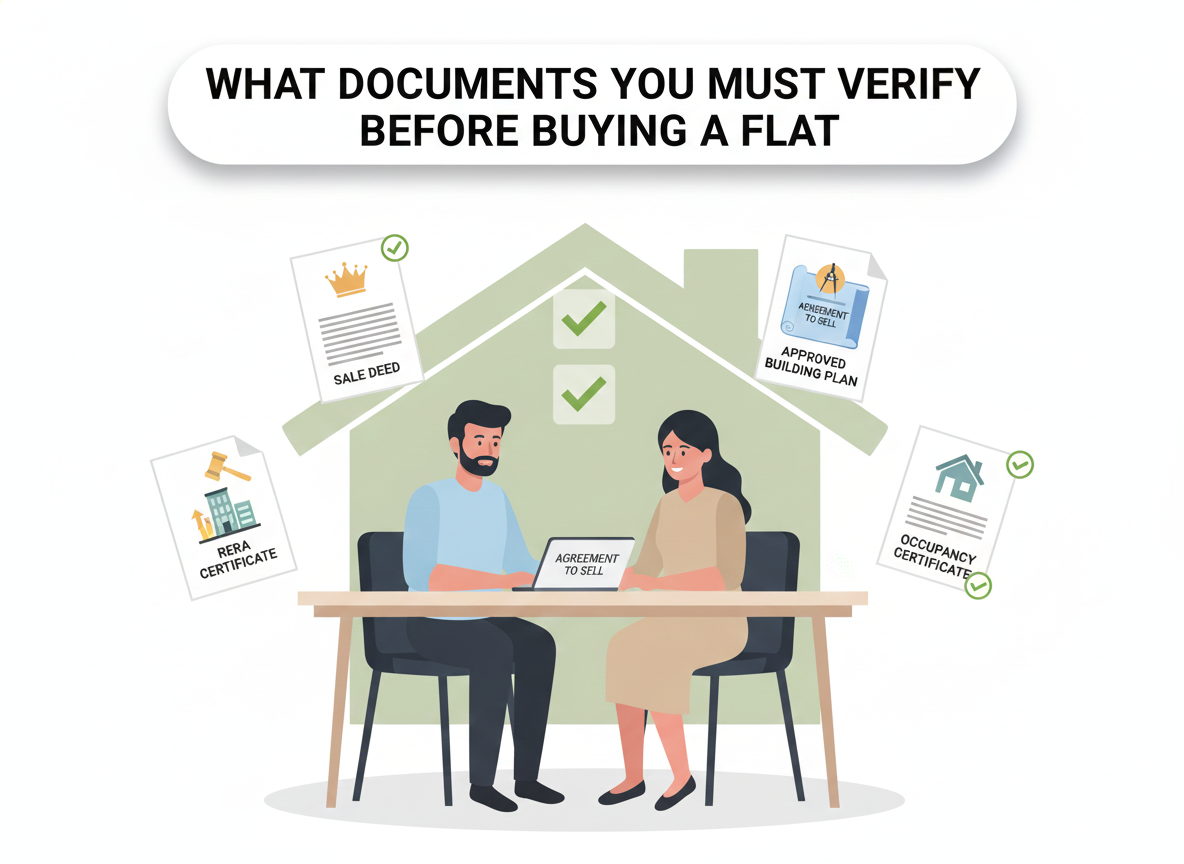
Since 2016, every residential project exceeding 500 square meters or 8 apartments must be RERA-registered. This isn’t a formality—it’s your shield against fraud, delays, and false promises. Visit your state’s RERA portal to verify the registration number, project timeline, carpet area details, and developer credentials. Projects like our JVJ Silicon Valley in Jagatpura proudly display RERA registration, ensuring complete transparency and buyer protection.
Title Deed and Chain of Ownership
The title deed proves the seller legally owns the property. Verify the complete ownership chain through original sale deeds, gift deeds, partition papers, or wills linked to the property. Request your lawyer to cross-check these with the local sub-registrar’s office. Red flag warning: if the seller provides only photocopies instead of originals, walk away immediately.
Encumbrance Certificate (EC)
An EC is your property’s financial health report, confirming it’s free from mortgages, loans, or legal claims for a specified period, typically 13-30 years. Banks mandate this before sanctioning home loans. The EC should clearly state “nil encumbrances” or be issued on Form 16. If encumbrances exist, listed on Form 15, ensure all debts are cleared before proceeding. You can obtain ECs online through your state’s land registration portal within 3-5 days.
Construction and Compliance Certificates
Approved Building Plans and Sanctions
Verify that construction matches municipal approvals. Check building plan sanctions, layout approvals, and zoning compliance with your local development authority like JDA in Jaipur. Unauthorized construction can lead to demolition orders or denial of occupancy certificates. Builders sometimes advertise amenities or extensions not legally approved—always cross-verify.
Occupancy Certificate (OC)
The OC confirms the building is constructed per approved plans and safe for occupancy. Living in a flat without an OC is illegal and can result in denial of municipal services like water and electricity, rejection of home loan applications, legal problems during property registration, and potential demolition orders with penalties. Never compromise on this—an OC is absolutely mandatory.
Completion Certificate (CC)
Issued once construction complies with the National Building Code of India, the CC precedes the OC. It enables conversion from non-domestic to domestic water rates, property tax assessment activation, and facilitates final home loan installment payment. Both CC and OC together confirm the project meets all safety and regulatory standards.
Financial and Legal Clearances
NOC from Relevant Authorities
Ensure the project has clearances from fire departments, water authorities, environmental departments, and electricity boards. These NOCs confirm compliance with safety norms and environmental standards. Missing NOCs indicate potential future legal complications.
Property Tax Receipts
Check the latest property tax payment receipts to ensure no outstanding dues exist with the municipal body. Unpaid taxes become your liability post-purchase.
Sale Agreement
Review the sale agreement meticulously before signing. It should clearly detail payment schedules and terms, possession timelines, carpet area specifications, promised amenities, penalty clauses for delays, and maintenance charges. Under RERA, developers cannot demand more than 10% advance payment before executing the sale agreement.
Additional Verification Steps
Allotment Letter: If buying an under-construction property, the builder should issue an allotment letter stating flat number, area, and payment details—essential for home loan applications.
Possession Letter: Confirms the possession date, useful for legal records and claiming tax benefits under Sections 80C and 24(b).
Society Formation Documents: For apartment complexes, verify formation certificates, bylaws, and maintenance agreements.
The Abhiyant Commitment
At Abhiyant Infrabuild, transparency isn’t optional—it’s foundational. We provide buyers with ready checklists including RERA registration details, approved plans, and all necessary certificates before flat allocation. Our proactive approach reduces risk and builds confidence, whether you’re a first-time buyer, NRI investor, or end-user seeking peace of mind.
Remember, document verification isn’t bureaucratic hassle—it’s your financial protection. Always engage a qualified real estate lawyer for thorough due diligence. The few thousand rupees spent on legal verification can save lakhs in future disputes. Your dream home deserves a foundation of legal clarity and absolute security.